
 Monday-Friday | 8am-4pm
 1969 NW 55th Ave, Margate FL 33063
Pool Heater Control and Automation Problems
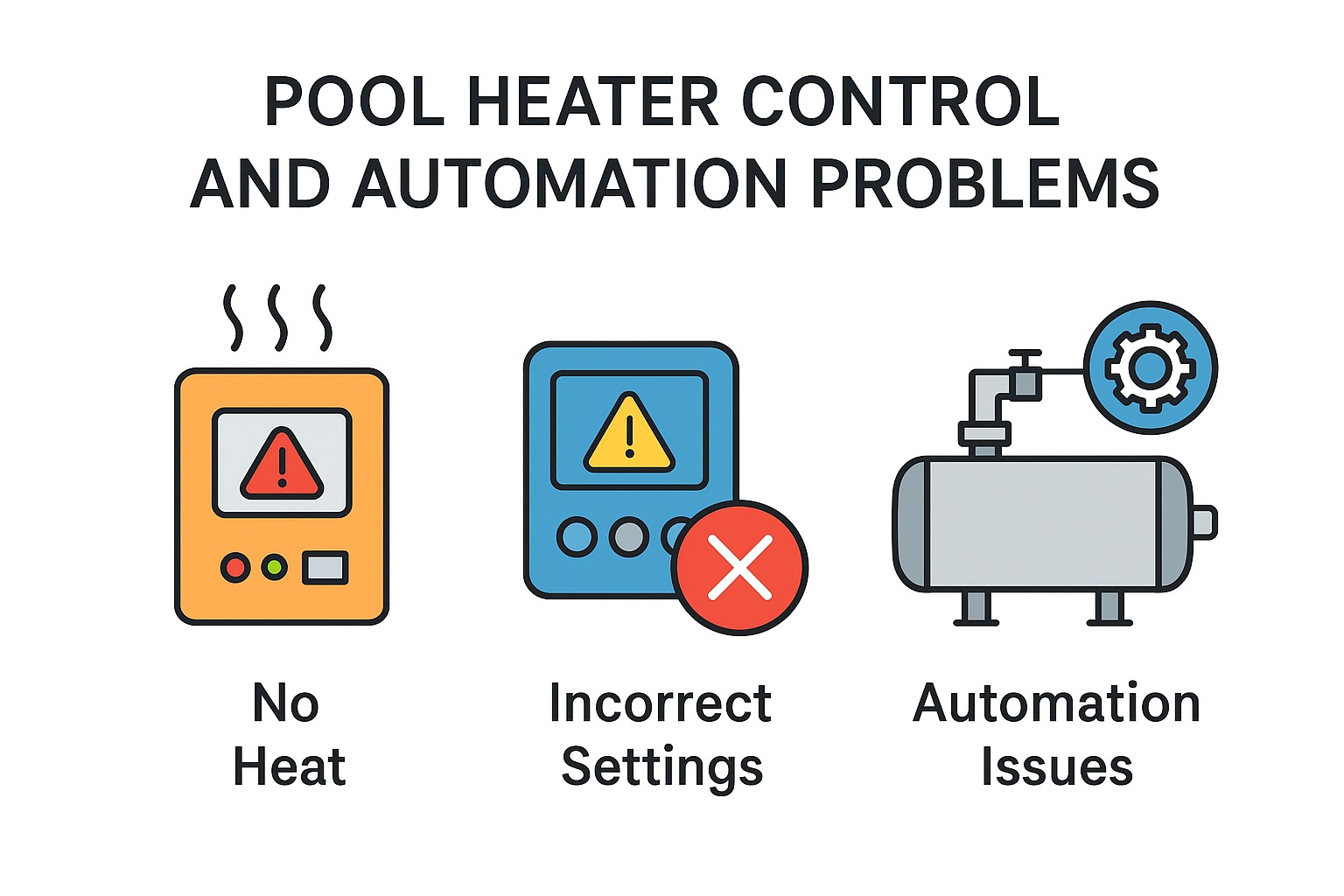
Pool Heater Control and Automation FAQs and How to Solve System Issues
Pool heaters today are smarter than they used to be. They connect with automation systems, communicate with variable speed pumps, and respond to commands from digital thermostats or mobile apps. When these systems work together, the pool heats efficiently and predictably. When something goes wrong, the heater may refuse to turn on, ignore commands, run at the wrong time, or heat only part of the system. Many South Florida homeowners first notice the issue when the heater does not respond to their remote or when the spa refuses to warm even though everything is set correctly. These situations can be confusing because the heater itself may be functioning well, yet the signals that control it are not.
Control and automation issues often begin gradually. One day the heater works from the control panel but not from the app. Another day it starts heating without being asked. Later, the spa mode stops engaging fully. These problems can be frustrating because the symptoms are inconsistent. They also create the impression that the heater is failing, even though the real issue may be related to sensors, wiring, or software. Understanding how control systems interact with heaters is the first step in diagnosing problems and restoring normal operation.
Why a heater may not respond to the thermostat or automation system
The most common reason a pool heater does not respond to automation is a communication error between the control board and the external system. The control board inside the heater receives information from sensors, thermostats, valves, and pump controls. When one component stops sending accurate signals, the heater may not know when to turn on. This can happen in both gas heaters and heat pumps.
One cause of communication issues is wiring corrosion. South Florida’s humidity and salt air gradually wear down connectors and terminals. Even small amounts of corrosion can disrupt low voltage communication wires. When the signal becomes weak or intermittent, the heater may not follow the automation commands consistently. These problems sometimes appear after heavy storms, when moisture enters the equipment area, or after long periods of high humidity.
Another potential cause is a faulty temperature sensor. Heaters depend on sensors to determine water temperature. A misreading can cause the heater to believe the water is already warm enough. When the sensor does not measure accurately, it sends incorrect information to the control board. Automation systems rely on that reading, and when it is wrong, the heater refuses to run even though the thermostat is set correctly.
Control panels can also introduce problems. Automation systems receive updates and adjustments over time. If the system software becomes outdated or misconfigured, it can send incorrect signals to the heater. In some cases, a simple power cycle restores communication. In others, the control module must be recalibrated to work correctly with the heater.
Valve actuators also affect heater response. Many homeowners assume that heater issues are mechanical, but a partially misaligned actuator can direct water improperly. If water bypasses the heater, the temperature sensors will not detect temperature changes, and the heater may shut off early or fail to start.
How variable speed pumps influence heater performance
Variable speed pumps are essential for energy efficient pools, but they also play a major role in how heaters function. A heater depends on a specific flow rate. If the pump runs too slowly, the heater may not sense adequate flow. Safety systems inside the heater will shut it down or refuse to start when flow is too low. This is a common issue in modern pool systems where the pump schedule favors low speeds to save electricity.
Homeowners often discover this issue when the heater works fine in spa mode but not in pool mode. Spa mode usually runs the pump at a higher speed because the plumbing is more restrictive. Pool mode may run at a slower speed that is ideal for filtration but insufficient for heating. The heater detects the low flow and stays off. Adjusting the pump schedule solves the problem, but many homeowners do not realize the connection until a technician points it out.
Another factor is the interaction between automation and pump programming. Some systems allow the automation controller to override the pump settings. If the automation system or mobile app changes pump speeds automatically, the heater may lose the flow it needs without the homeowner noticing. This is common in pools where lighting schedules, cleaning cycles, or salt system operations temporarily modify pump performance.
Flow sensors also contribute to heater behavior. If the flow sensor or pressure switch inside the heater becomes worn, it may misinterpret the pump speed. Even when the pump is running at an appropriate speed, the heater may register insufficient flow. This leads to cycles where the heater turns on and off repeatedly or refuses to heat during certain times of day.
Wiring issues and signal errors
Wiring is one of the most overlooked causes of heater automation problems. Heaters and automation panels communicate through low voltage connections. When these wires become loose, corroded, or damaged, communication becomes unreliable. In South Florida, pests sometimes chew through wires, particularly in areas where the equipment pad is near vegetation. Salt air also corrodes bare copper, especially on older systems that have been exposed for many years.
Signal errors can occur inside the heater as well. Control boards can fail gradually. A heater may lose the ability to read external commands while still functioning normally in manual mode. When this happens, the homeowner may think the automation system is broken when the real issue lies inside the heater.
Power fluctuations can also cause automation problems. Storms, lightning strikes, and grid disruptions are common in South Florida. These events can temporarily disrupt communication between systems. In severe cases, control boards require replacement after electrical surges.
How heater integration with pool and spa automation works
Pool and spa automation systems are designed to coordinate heaters, pumps, valves, and sensors so that each component works together without conflict. When a homeowner switches from pool mode to spa mode, valves rotate to redirect water, pump speeds increase, and the heater automatically targets the higher spa temperature. When any part of this sequence fails, the heater may not run.
One common integration problem is valve alignment. Spa mode demands precise valve positioning. If an actuator slips or loses calibration, water may mix incorrectly between pool and spa lines. The heater may not trigger because the water passing through it is not circulating the way the automation expects.
Another integration issue occurs when systems share sensors. Some setups use a single temperature sensor to monitor both pool and spa lines. If that sensor is installed in the wrong location or fails, the heater receives inaccurate readings. This affects heating times and automation behavior. The system may remain stuck in pool mode or fail to detect when the spa requires heat.
Automation timing also influences performance. Some systems are programmed to limit when heaters can run to avoid excessive energy use. If the automation schedule conflicts with the pump schedule, the heater may have no opportunity to run even when it is commanded to heat.
When the heater runs but the water does not warm
There are situations where the automation system appears to work correctly but the water temperature does not increase. In these cases, the heater may be heating only the heater body rather than circulating warm water into the pool. This usually happens when valves are misaligned. The water may bypass the heater entirely without triggering an error.
A heater may also run without heating the water if the temperature sensor is stuck at a fixed reading. The heater believes it is meeting its set point and shuts down too early or runs only briefly. In other cases, the heater may fire normally but the pump speed changes mid cycle due to automation adjustments. Once the speed changes, flow drops below the required level and the heater shuts off.
Remote control and mobile app issues
Many homeowners now rely on mobile apps to manage their pool systems. While convenient, apps introduce several new variables. Software updates can affect communication. Home networks can disconnect briefly during storms. Automation hubs can lose sync with the heater if the Wi Fi signal is weak or if a reboot occurs.
If a heater responds inconsistently to app commands, the issue may not be the heater at all. It can be a network delay, a firmware mismatch, or a controller that needs to be recalibrated. A simple reset sometimes restores function, but long term reliability requires ensuring that all components communicate on the same protocol and schedule.
When sensors fail or drift out of calibration
Temperature sensors age over time. Scale, corrosion, and UV exposure affect accuracy. When a sensor drifts out of calibration, the heater may operate incorrectly even when the automation system works perfectly. A faulty sensor can cause several symptoms. These include heating too slowly, heating at the wrong times, shutting off early, running longer than expected, or refusing to heat at all.
Replacing a sensor usually restores performance immediately. However, diagnosing a sensor requires testing the reading against a reliable thermometer. A technician can perform this comparison and determine whether the sensor or the heater itself is responsible.
Getting professional help
If your heater is ignoring automation commands, turning off unexpectedly, responding only sometimes, or failing to heat your spa or pool correctly, the issue may involve sensors, wiring, pump speeds, valve alignment, communication errors, or software conflicts. These problems often overlap and can be difficult for homeowners to diagnose by sight alone. The team at Florida Pool Heating understands how heaters connect with automation systems and how South Florida’s climate affects wiring, sensors, and electronic controls. If your system is not responding the way it should, contact us today to schedule service and get your heater and automation working together the way they were designed to.
Contact Florida Pool Heating Today!