
 Monday-Friday | 8am-4pm
 1969 NW 55th Ave, Margate FL 33063
Pool Heater Will Not Maintain Temperature
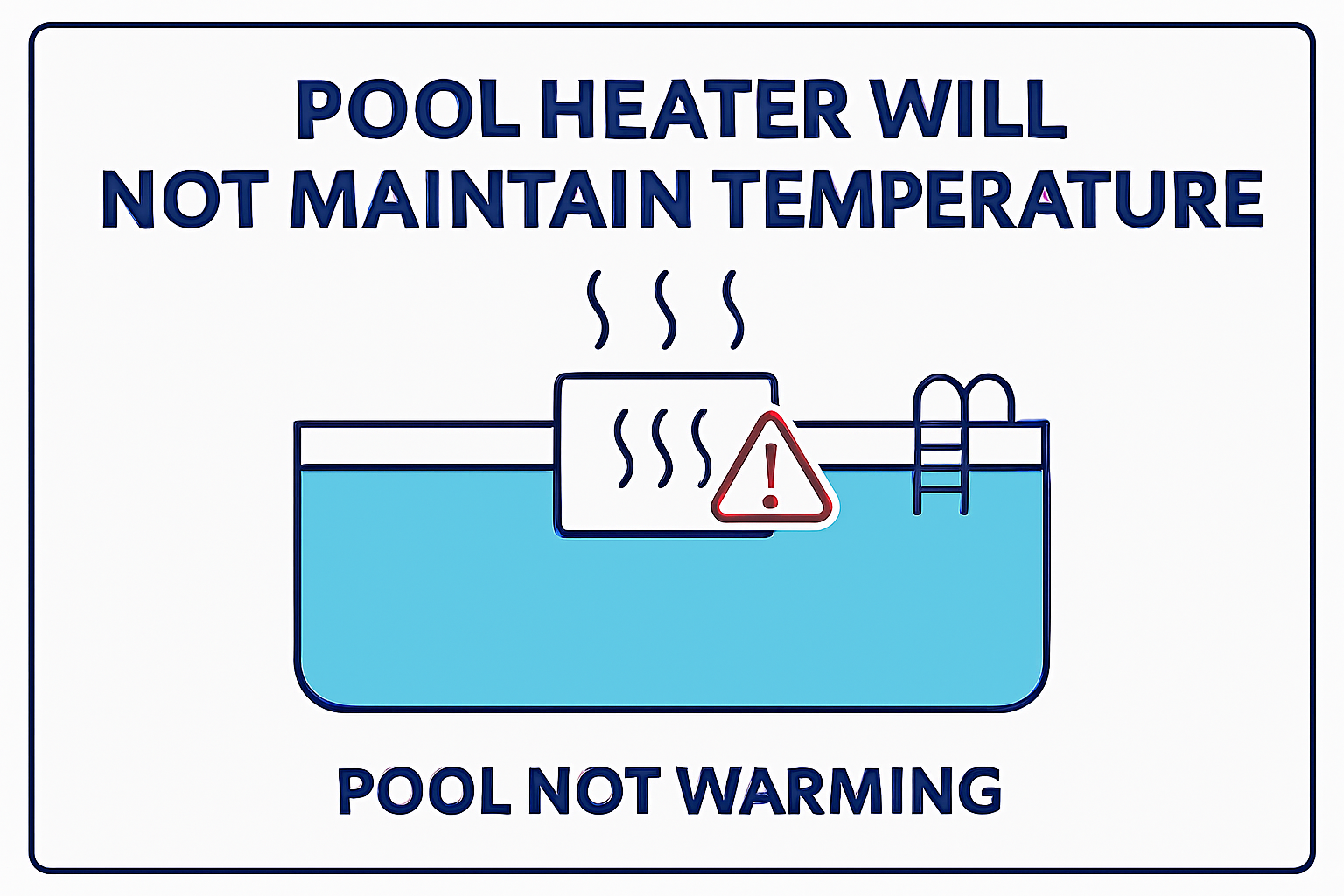
Pool Heater Won’t Maintain Desired Temperature? How to Diagnose and Fix It
A pool heater that cannot hold a steady temperature is one of the most frustrating issues for a homeowner. The water may warm up during the day but drop again by evening. The heater may reach the temperature you want but start drifting downward within hours. Sometimes the system seems to work only on certain days even with the same settings. These problems can occur with any type of heater, whether it is a heat pump, gas heater, or solar system. What they all share is a dependence on stable operating conditions. When one of those conditions changes, the heater may no longer be able to keep up.
In South Florida, temperature swings can feel surprising. Overcast days, sudden storms, and coastal winds pull heat out of the water quickly. Even a well sized heater has to work harder during certain times of year. The problem is not always the heater itself. The pool environment and equipment configuration influence performance in ways that can be easy to overlook. Understanding why temperatures fluctuate helps narrow down what needs attention.
Why a heater reaches the target temperature but cannot hold it
A pool loses heat through evaporation, which increases when wind is present or when the air is cooler than the water. South Florida evenings can be breezy even after warm, sunny days. When the water is warmer than the surrounding air, evaporation is more intense. The heater may raise the pool to the desired temperature, but wind exposure can take that heat away faster than the system replaces it. Homeowners near the coast experience this more frequently because open water creates natural airflow that moves across backyards.
Heat loss through the surface is another major factor. A pool without a cover loses a tremendous amount of heat at night. Even a powerful heater cannot fully counteract that loss. The heater may run longer or cycle more frequently to stay ahead of temperature decline, but the water will still cool more than expected. This becomes more noticeable during cool mornings or cloudy days when the heater must work harder to maintain stability.
Another common reason for temperature drift is insufficient heater sizing. A heater must be the right capacity for the volume of water, the shape of the pool, the wind exposure, and the temperature difference between desired water and ambient air. Many heaters are sized based only on pool volume, not environmental conditions. A heater may be adequate during warm months but unable to maintain temperature in cooler seasons. This issue is common in older installations or when a pool has been remodeled. A deeper or larger surface area requires more heating power than the original system was designed to support.
Water circulation also affects temperature stability. If the pump does not run long enough or fast enough, the heater cannot consistently bring the entire pool to the desired temperature. Variable speed pumps often run at reduced speeds, and while this saves energy, it may not provide enough flow to support continuous heating. The heater may turn on and off because the flow drops below the required threshold. Each time it shuts down, the water cools. Over the course of a day, this leads to fluctuating temperatures even though the heater itself is functioning properly.
There is also the possibility of sensor problems. The temperature sensors in modern heaters measure the water as it passes through the system. If a sensor is worn, miscalibrated, or corroded, it may send inaccurate readings. A faulty sensor may tell the heater that the water has reached the set point when it has not. As a result, the heater shuts off prematurely. When the temperature drops again, the heater restarts. This cycle creates the illusion that the heater cannot maintain temperature, when in reality the control board is responding to incorrect information.
The impact of wind exposure, pool covers, and environmental conditions
South Florida has a unique climate that influences heater performance. Wind is one of the strongest contributors to heat loss because it increases evaporation. Backyards that face open lakes, canals, or coastal inlets experience persistent airflow. Pools positioned at the center of the yard rather than near wind blocking structures lose more heat. Even small differences in yard layout can influence heat retention. A heater can raise the water temperature during the day but lose ground as soon as wind picks up in the evening.
Pool covers help reduce heat loss, but many homeowners avoid using them due to convenience concerns. Without a cover, heat loss at night can be significant even during warm months. If the temperature drops ten degrees overnight, the heater must work harder the next day to recover. While a cover is not essential year round, it makes a noticeable difference during the cooler parts of the year or after long periods of cloud cover.
Cloudy days and storms also slow down heating. Heat pumps in particular rely on warm outdoor air. When cloud cover blocks the sun and air temperatures dip, a heat pump may still operate but with reduced capacity. Gas heaters perform better in cooler weather, but even they face challenges when wind affects the flame or when the pool loses heat faster than the system replaces it.
How heater sizing affects temperature stability
Proper heater sizing is critical. A heater that is too small can reach the target temperature occasionally but will struggle to keep it there. Larger pools with significant surface area lose heat quickly through evaporation. Shallow pools warm faster but also lose heat faster than deeper ones. Spas connected to pools require additional capacity to maintain the desired therapy temperature.
Many homeowners inherit heater sizes from previous owners or from builders who based sizing on cost rather than performance. When circumstances change, such as a switch from a single speed pump to a variable speed pump or changes in the yard landscape, the heater may no longer be adequate. Sizing guides from companies like Florida Pool Heating factor in environmental variables, not just pool volume. This ensures that the heater selected can maintain temperature reliably rather than just reaching it once.
The importance of consistent setups and proper automation
Modern pools often rely on automation systems to control heaters, pumps, and valves. These systems help manage energy use and ensure the equipment runs at the right times. Problems arise when the automation settings do not match the heater’s requirements. If the pump schedule shuts off too early, the heater cannot complete its heating cycle. If the automation prioritizes filtration rather than heating, it may run the pump at speeds too low for the heater to operate consistently.
Some homeowners also unknowingly create conflicts between heating modes when switching between pool and spa. Automation systems need clear programming to avoid situations where water bypasses the heater unintentionally. A valve that is slightly out of alignment or a pump that is running at the wrong speed can cause the heater to cycle inconsistently, leading to fluctuating temperatures.
A heater works best when the entire system is coordinated. Consistent pump speed, correct valve positions, accurate temperature sensors, and synchronized automation ensure stable heating. Without proper alignment, even the most advanced heater cannot maintain a steady temperature.
How different heater types behave when temperatures drop
Heat pumps, gas heaters, and solar heaters all handle temperature maintenance differently. Heat pumps are efficient during warm days but struggle during cold or windy weather. A heat pump can maintain temperature most of the year in South Florida, but during the coldest mornings it may run longer or lose ground before temperatures rise again.
Gas heaters perform well in all temperatures because they generate heat through combustion. However, they depend on stable gas supply, clean burners, and unobstructed airflow. If anything interferes with the flame, the heater shuts down or operates below capacity. Even small drops in fuel pressure or minor burner buildup can reduce heating power.
Solar heaters cannot produce heat at night or when the sky is heavily overcast. They rely entirely on sunlight. A solar system may raise water temperature during the day but lose heat overnight. Without a secondary heater or a pool cover, solar alone may not maintain temperature during the cooler parts of the year.
When temperature sensors create false readings
Temperature sensors inside heaters determine when to turn the system on and off. If a sensor becomes coated with scale or begins to malfunction, it may send incorrect readings to the control board. When the sensor claims the water is warm enough, the heater shuts down. The pool then cools, and the heater starts again. This repeated cycling causes unstable temperatures and increases wear on the equipment.
Sensor replacement is usually straightforward, but diagnosing the problem requires testing to confirm whether the reading is truly inaccurate. A technician can compare the heater’s reading with an external thermometer to identify discrepancies.
Getting professional help
If your pool heater raises the temperature but cannot keep it there, the issue may involve sizing, airflow, wind exposure, water flow, faulty sensors, or automation settings. South Florida’s weather conditions can make these problems more noticeable, especially during cooler months or windy evenings. A technician who understands how these factors interact can diagnose the true cause rather than relying on guesswork. The team at Florida Pool Heating specializes in identifying why temperature stability problems occur and restoring effective heating. If you want consistent, comfortable water temperatures without constant adjustments, contact us today to schedule a system assessment and ensure your heater is working at its best.
Contact Florida Pool Heating Today!